· Dissemination · 3 min read
Three Posters and a Talk: A Successful UT REAL Health AI Symposium
Project MAPLES and the Jamieson Lab shared work on AI assessment, continuous governance, rubric design, and privacy-preserving infrastructure at the October 7–8 symposium in Austin.
Project MAPLES and the Jamieson Lab celebrated a successful showing at the 2026 UT REAL Health AI Symposium, held October 7–8 at the AT&T Conference Center in Austin, with three posters and one oral presentation.
The presentations brought together complementary work on AI-assisted assessment, governance, clinical rubric design, and technical infrastructure:
- Ameer Hamza Shakur presented “Evaluating Agreement Between AI and Human Graders in Medical School Simulation,” developed with Judah Gruen and collaborators across the project.
- Huong-Tra Ngo presented “Continuous Governance of AI-Assisted Assessment in Medical Education: A Practice-Informed Framework,” addressing how oversight can evolve alongside assessment practice.
- Lindsey Stockton of UT Tyler presented “Ask a Better Question: How an AI Grader Sharpened Hypothesis-Driven History-Taking in a Medical Student Objective Structured Clinical Examination,” sharing a partner-site perspective on rubric refinement and clinical assessment.
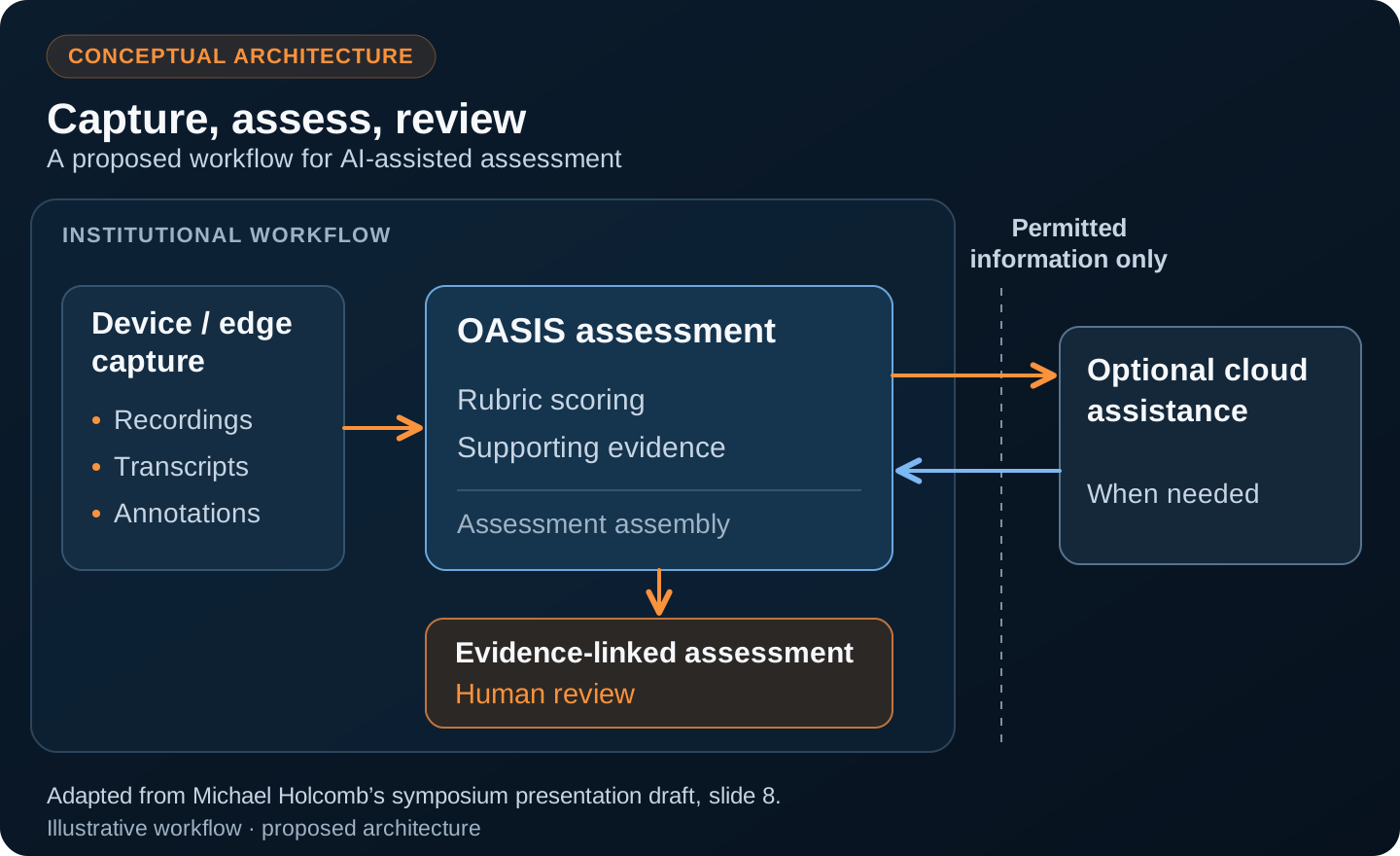
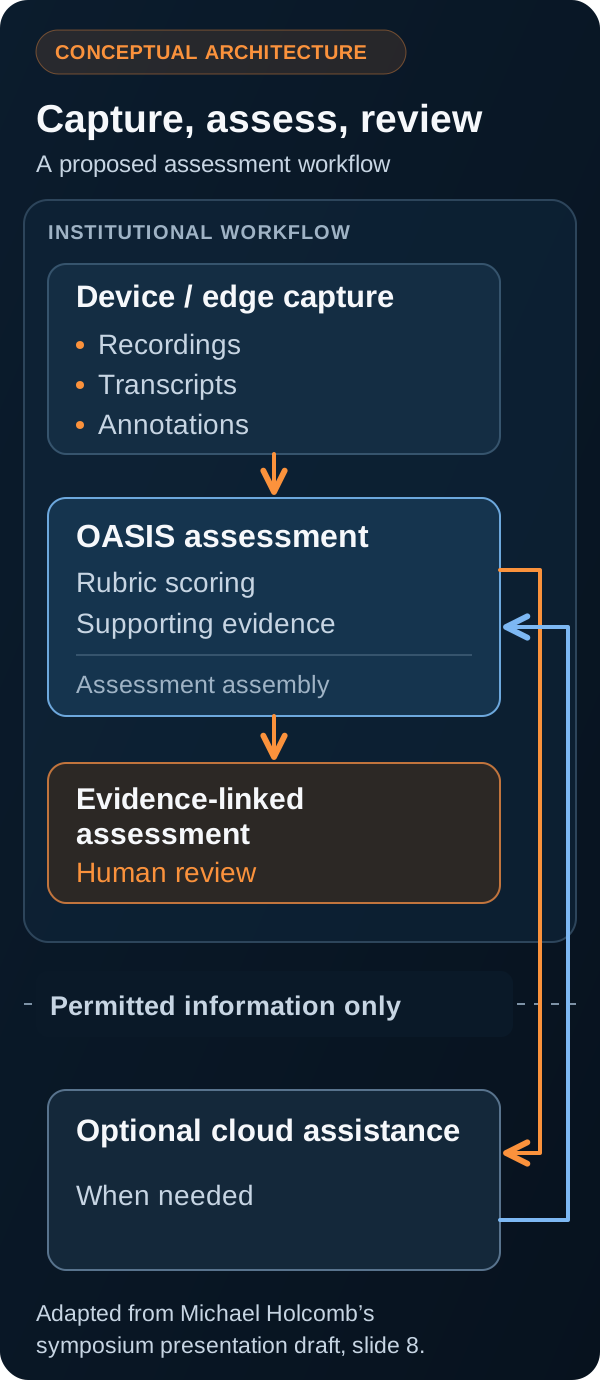
- Michael Holcomb delivered “A Privacy-Preserving Hybrid AI Architecture for Automated Assessment” and served as a session moderator.
Together, the three posters and talk showcased the range of expertise supporting Project MAPLES: educators and researchers working through the scientific, practical, and governance questions involved in bringing AI-assisted assessment into medical education.
Thank you to our presenters, collaborators, and the symposium organizers for making the meeting a success. We look forward to building on this work with our UT-REAL partners.
Browse the Posters
Governance and rubric-design posters added October 27, 2026. Ameer and Judah’s agreement poster added November 13, 2026.
Full-resolution posters and short summaries are available in the UT-REAL Gallery:
Continuous Governance of AI-Assisted Assessment in Medical Education: A Practice-Informed Framework
— Huong-Tra Ngo and colleagues describe an iterative approach to oversight, human review, and deployment readiness.Ask a Better Question: How an AI Grader Sharpened Hypothesis-Driven History-Taking in a Medical Student Objective Structured Clinical Examination
— Lindsey Stockton and colleagues show how AI-grader disagreements helped reveal and refine ambiguous rubric criteria.Evaluating Agreement Between AI and Human Graders in Medical School Simulation
— Judah Gruen, Ameer H. Shakur, and colleagues compare AI and human ratings across six clinical cases at UT Tyler and UT Health San Antonio, using faculty review of disagreements to guide rubric refinement.
These conference posters document work shared at the October 2026 symposium. The governance poster’s partner-progress table reflects that preparation period.
Explore the Work
These public resources provide more context for the assessment tools and research discussed at the symposium:
- Read the prospective UTSW study published in npj Digital Medicine, with a plain-language overview and links to the paper.
- Watch the MAPLES workflow, from rubric upload to evidence review and faculty-reviewed results.
- Explore AI-assisted rubric authoring and encounter upload and grading in the Wayfinder demonstrations.
Meet the consortium team or discuss a focused pilot or research collaboration.